Blog
China’s Four Famous Brocades
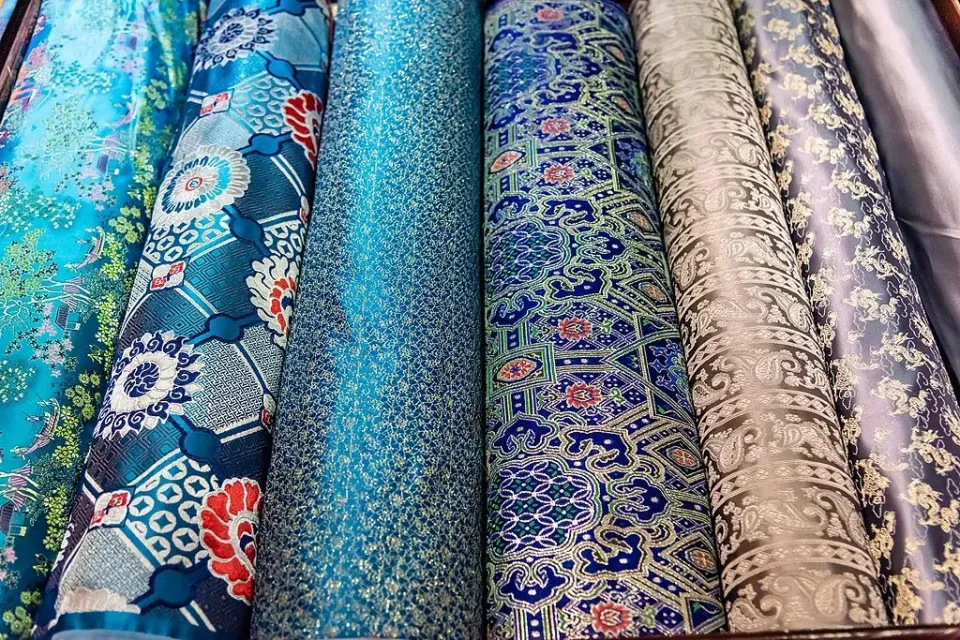
China's Four Famous Brocades China's Four Famous Brocades are Nanjing Cloud Brocade, Chengdu Shu Brocade, Suzhou Song Brocade, and Guangxi Zhuang Brocade. The core of brocade weaving lies in the jacquard technique, which controls the interlacing of warp and weft threads through pre-set patterns. Using silk as the primary thread, it creates exquisite and brilliant designs.
- Nanjing Cloud Brocade
Origin: Nanjing, Jiangsu Province. Known as “Imperial Tribute” due to its exclusive production for the imperial court during the Ming and Qing dynasties.
History: Originating in the Song Dynasty, it boasts a history of approximately 1,600 years, representing the pinnacle of ancient silk weaving craftsmanship.
Technique: Woven using traditional jacquard wooden looms, primarily employing the “continuous warp, discontinuous weft” technique. This allows for “different colors for each floral motif,” enabling the creation of dazzling patterns using gold thread, silver thread, peacock feather thread, and other materials.
Characteristics: Features dazzling colors and intricate patterns dominated by dragons, phoenixes, qilin, and scrollwork floral motifs. Its layout is meticulously structured and solemn, exuding a profound imperial grandeur. Renowned as “a piece of brocade worth its weight in gold,” it is hailed as the “crown jewel of brocades.”
- Chengdu Shu Brocade
Origin: Chengdu, Sichuan. Named for its production in Shu territory, it represents the quintessential Han Chinese traditional brocade.
History: Its origins trace back to the Spring and Autumn and Warring States periods. It gained renown during the Qin and Han dynasties, reaching its zenith in the Tang dynasty, with a history spanning nearly 3,000 years.
Technique: Employing the “through warp and weft” technique, both warp and weft threads run the entire width of the fabric. Patterns are woven by combining colored stripes with floral motifs, geometric designs, and decorative elements.
Characteristics: Features vivid colors and striking contrasts. Patterns predominantly include lotus flowers, paired magpies with strings of pearls, landscapes, and figures, blending Han ethnic characteristics with regional styles. Known for its structured composition and exceptional durability, it is hailed as the “Mother of Brocades.”
- Suzhou Song Brocade
Origin: Suzhou, Jiangsu Province. Developed during the flourishing of Song Dynasty painting and calligraphy arts, it was primarily used for mounting paintings and calligraphy, as well as for clothing.
History: Originating in the late Song Dynasty, it inherits techniques from Sui and Tang dynasty brocade weaving. After a thousand years of development, it became a unique brocade variety in the Jiangnan region.
Technique: Employing a “through warp, broken weft” structure combined with warp-weft pattern formation, it creates double-sided patterns through triple weft variations. Colors complement each other, requiring extremely high skill.
Characteristics: Features elegant, soft hues with patterns dominated by geometric motifs, floral designs, and auspicious beasts. Its delicate, refined compositions and soft, smooth texture blend scholarly refinement with practical utility, earning it the title “Crown of Brocades.”
- Guangxi Zhuang Brocade
Origin: Guangxi Zhuang Autonomous Region, a traditional brocade created by the Zhuang people.
History: Originating in the Han Dynasty and established during the Song Dynasty, it boasts over 1,000 years of history and was once presented as tribute to the imperial court.
Technique: Woven with silk warp and cotton weft or silk warp and silk weft, using a bamboo cage loom for jacquard weaving. Weft threads create patterns, forming symmetrical designs.
Characteristics: Features bold color contrasts dominated by red, green, black, and yellow. Patterns predominantly include geometric shapes, flora and fauna, and characters, embodying a vibrant and cheerful ethnic style that reflects the Zhuang people's reverence for heaven and earth and their aspirations for a better life.
The Four Great Brocades—as outstanding representatives of traditional Chinese handwoven brocades—find extensive applications in finished products. Their use spans historical imperial court and ethnic attire to modern lifestyle items such as clothing, ties, backpacks, bedding, and art collectibles.
Related Posts
The manual craftsmanship of mulberry silk quilt
The craftsmanship of silk quilts is an integral part of China’s traditional mulberry silk weaving culture, sharing a common lineage with techniques such as mulberry cultivation, silkworm rearing, silk reeling, and weaving. It embodies the wisdom and aesthetic sensibilities of the Chinese nation.